Beginner Guide
Self-Guided Bike Tour vs Planning It Yourself: When Paying Is Worth It
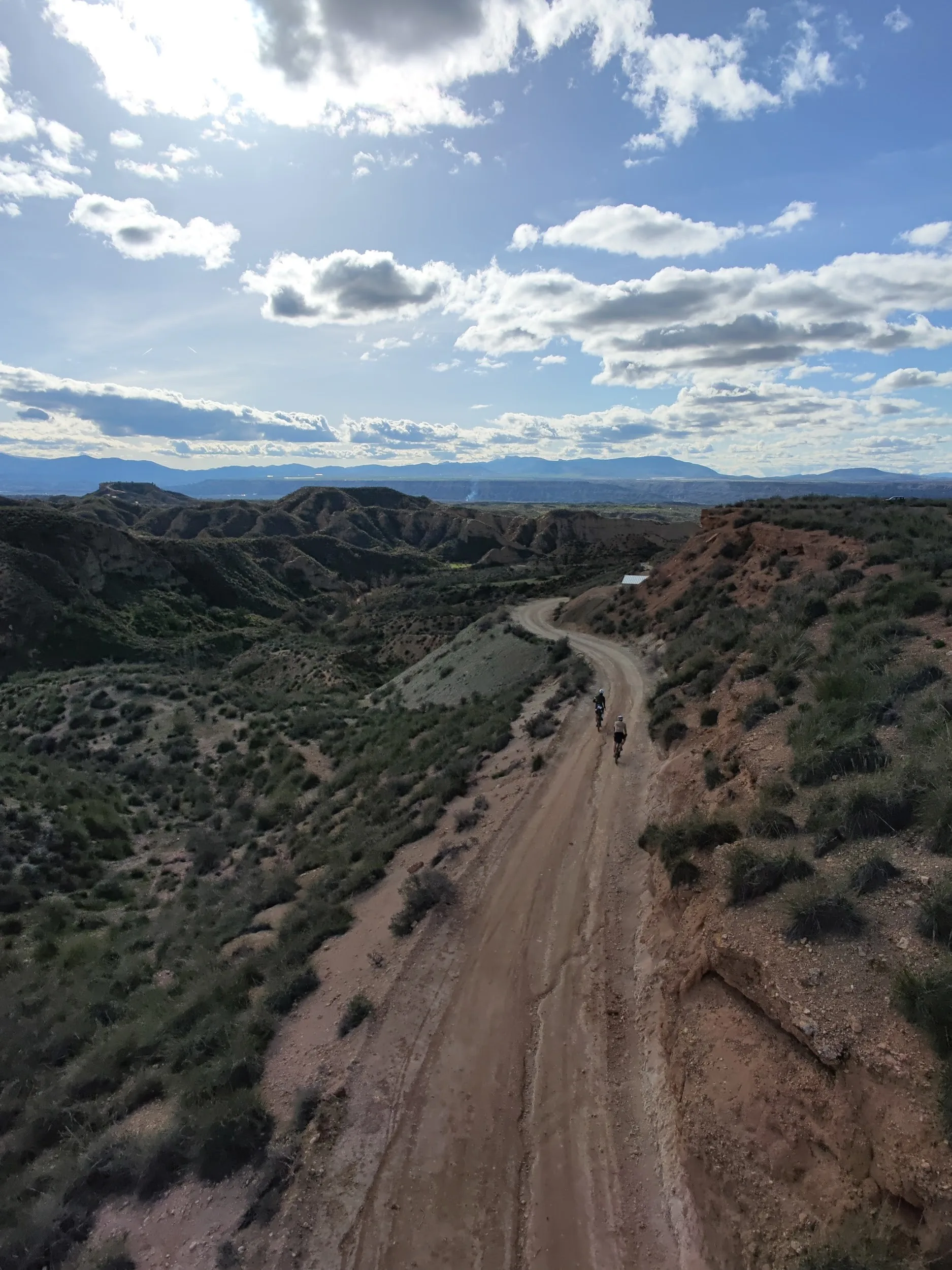
Some of us enjoy the planning process just as much as the ride itself. We analyse Strava heatmaps, build Komoot routes, study elevation profiles, and try to piece together the perfect week. There is real satisfaction in that. You know your preferences, you trust your judgment, and you like the idea that the trip you go on is the one you designed.
So the question is a fair one: why would you pay for a self-guided bike tour when you are clearly capable of planning your own?
This article is for that choice.
The 23-tab planning spiral most of us know
It's easy to get sucked into the research. You can quickly spend hours cross-referencing maps, only to end up with dozens of open tabs and more questions than answers. A full head and unfinished decisions is a part of the price we pay for planning it ourselves.
Late at night you find yourself juggling hotel options in Granada, quiet mountain villages, and coastal stops where you hope to end the day. You are weighing gravel loops against tarmac alternatives, checking whether that road that looks rideable on satellite view is actually rideable with a loaded bike, and trying to work out which days will be too long and which will feel too short.
You enjoy it. You are good at it. But at some point, even after 10 to 20 hours of planning, a quiet doubt appears: is this actually the best possible version of my holiday, or just the best version I could build from here?
That is when an organised self-guided tour starts to make sense.
What planning it yourself genuinely offers
Doing your own research is not the wrong choice. It offers real value that is worth being honest about.
You get complete control. You decide the route, the daily distances, the exact cafes you want to stop at. You can adjust things up to the last minute. For riders who are used to making their own decisions, that autonomy feels natural and right.
Modern tools make it easier than ever before. Komoot, Strava, RideWithGPS, Google Street View together give you an extraordinary amount of information before you have ridden a single kilometre. You can check gradients, road surfaces, photos from other riders, and stitch together segments into something that looks like a well-crafted itinerary.
If you enjoy the process and your expectations are flexible, planning it yourself can be entirely the right call. Especially for familiar regions, or shorter trips where the stakes are lower.
But digital lines on a map still have blind spots.

What a screen can't show you
No matter how thorough your research, there are details you can only know from actually being there.
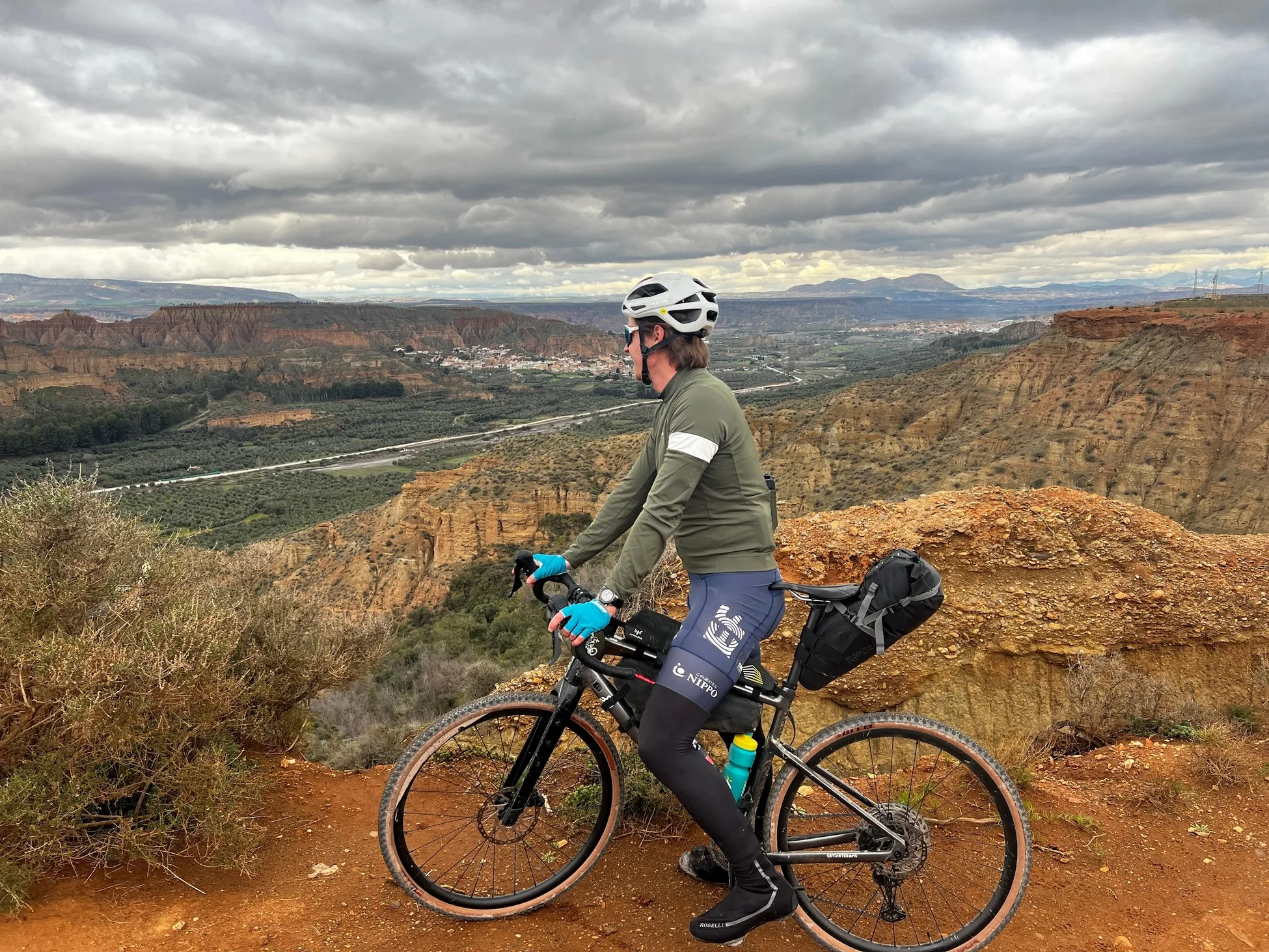
You can't feel what a stretch of gravel in Andalusia is like on a loaded bike, ridden after a full day in the legs, rather than on an unloaded local out for a Sunday spin. A section that looks manageable in photos can turn into loose rock and hike-a-bike territory once you add bags and fatigue.
You can't hear the traffic on that secondary road until you are on it at 8:30 on a Monday morning, realising it's the commuter shortcut for an entire valley.
You cannot tell from a booking site whether the hotel in the Netherlands has secure bike storage, an early enough breakfast, and staff who understand what it means to arrive tired and muddy with a drivetrain that needs attention.
This is where a founder-tested self-guided tour earns its place. A route that has been ridden, refined, and ridden again is not just a cleaner GPX file. It's a series of small decisions made by someone who was actually there:
- Take this detour because the view makes the extra distance worthwhile.
- Avoid this shortcut because the gravel turns to ankle-deep sand after rain.
- Stay at this hotel because the owner is a cyclist and keeps a floor pump behind the desk.
You can approximate a lot with data. You cannot fake experience.
Ready for your own adventure?
Explore our self-guided gravel trips: tested routes, hand-picked stays and support on call.
When paying becomes the smarter choice
Think about what is most scarce for you right now: time, certainty, or money.
If you have more time than money, genuinely enjoy the research, and do not mind a few surprises along the way, planning it yourself remains a good option. You will learn a lot and you will own every decision.
But if you are a senior professional with limited holiday time, a parent squeezing a real cycling week into a narrow window, or a group of riding friends trying to line up everyone's calendars, the calculation shifts. Your annual trip has higher stakes. One bad day, one mediocre hotel, one route that turns out rougher than expected, and the whole week can feel like a waste of something you will not get back.
In that context, booking an organised self-guided tour means:
- Saving 20 or more hours of planning and putting that time back into training, family, or rest.
- Improving the quality of the week itself: better-paced days, more interesting roads, hotels you would likely never have found on your own.
- Lowering the risk that one planning mistake changes the tone of the whole trip.
You still start every morning without a guide. You still ride at your own pace, stop when you want, and make every decision about how your day goes. You just do it on a foundation that has already been tested, rather than one built on research and optimism alone.
A simple check before you decide
If you are weighing planning your own trip against booking one of our routes, in the Netherlands, Andalusia, Slovenia, Scotland, Rwanda or Norway, run through this quickly.
Plan it yourself if:
- You enjoy the research as much as the riding.
- You have flexible time and can absorb a day that turns out longer or harder than expected.
- You already know the region's gravel roads well, not just its tarmac.
- You are happy with a good trip rather than a carefully built one.
Book a self-guided tour if:
- You are travelling to a new region, especially in the mountains, like Andalusia or Slovenia, and want the best possible version of it, not just the one you happened to design from home.
- You only have one serious cycling week this year and want to get everything out of it.
- The details you can't see from home matter to you: safe bike storage, personal contact, early breakfasts, roads that have actually been checked with a loaded bike.
- You are sharing the trip with a partner or friends who have less appetite for things going sideways.
A rough rule: does the time spent researching, plus the frustration when something goes wrong, cost you more than the price difference between planning it yourself and booking with us? Does comfort weigh in, not just money? Do you value personal contact and support on the road? Then it is time to book an organised self-guided trip.
Try this before you decide
Still in doubt? You do not have to choose blindly.
Take the route you have already half-planned in Komoot. Look at your daily distances, elevation, and hotel ideas. Then put it next to one of our self-guided itineraries in the same region.
Ask yourself honestly:
- Which one would I rather ride if this was my only cycling week this year?
- Where does the pre-ridden route clearly improve on my version: less traffic, more interesting roads, better day-to-day flow?
- How much would it be worth not to worry about the things I simply cannot see from here?
For some trips, the honest answer will still be to build it yourself. For others, especially those further from home or closer to your heart, a self-guided tour is not just a luxury. It's just a smarter way to protect the one thing you can't get back: your time.
About the author
Legendary Rides is run by co-founders Kees and Yannick, who build and test self-guided gravel trips across Europe and beyond.
Chat with Kees on WhatsAppRead next
What is bikepacking? A beginner's guide to your first trip
Bikepacking is a multi-day ride with everything you need on your bike. If you can ride 40 to 50 km of gravel a day, you can start. Here's how.
3 min read Legendary Rides
Solo cycling holidays: how to ride a self-guided trip alone
Want a cycling holiday but no one to ride with? Book for one, ride at your own pace and still have someone on the other end of the line.
3 min read Legendary Rides