Destination Guide
Cycling in Rwanda: The Land of a Thousand Hills
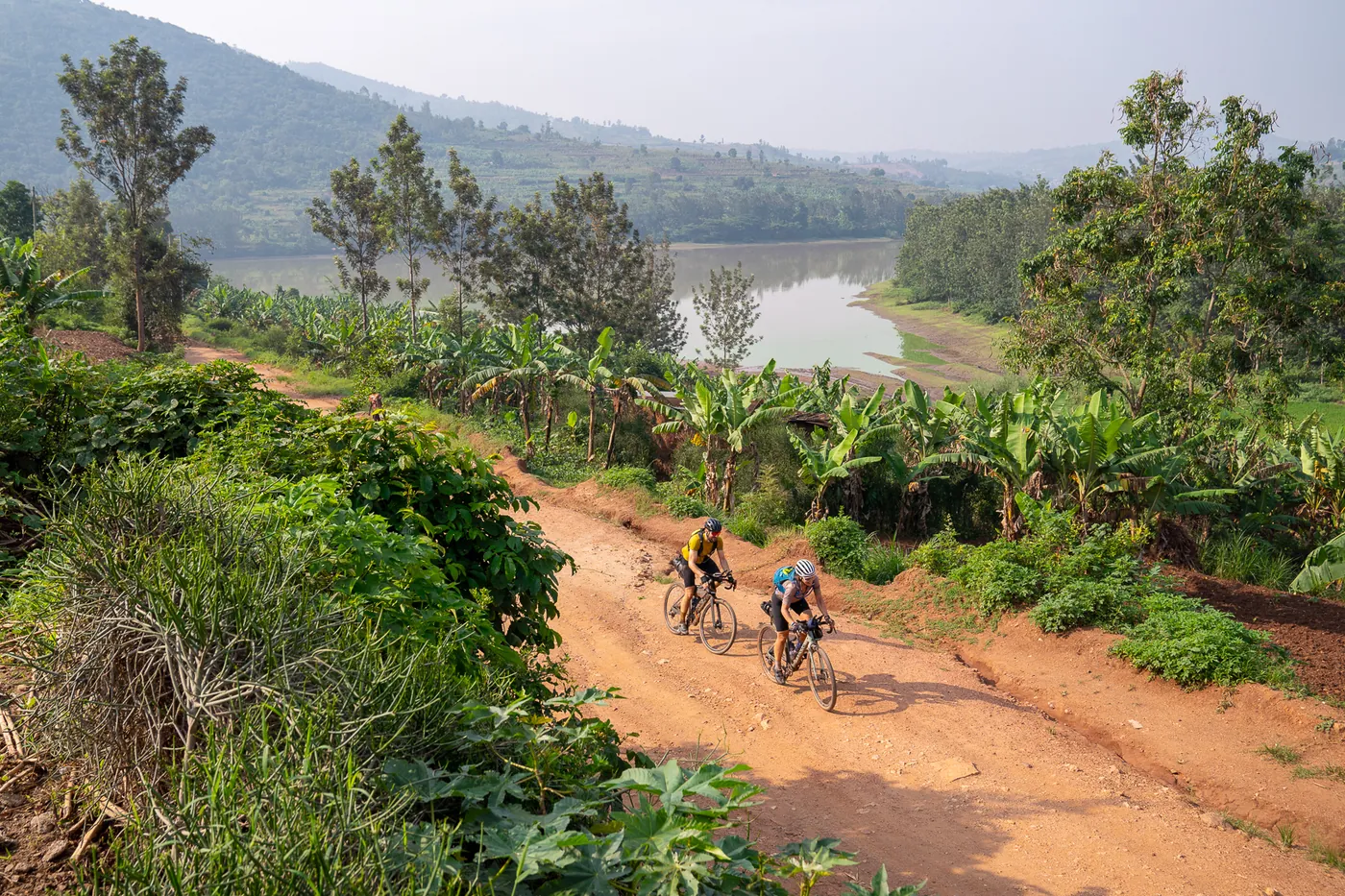
Le Pays des Mille Collines: The Land of a Thousand Hills. However hackneyed Rwanda's strapline has become, plastered everywhere from pitchside Premier League billboards to the hallowed pages of the Lonely Planet guide, there's no denying its allure to the two-wheel-inclined. A cursory Google search yields a carousel of snapshots of Rwanda's undulating topography. Yet none live up to the reality, the sheer dimension of a landscape that rises and falls so relentlessly that forward progress becomes an omnidirectional endeavour. The country's puckered crust offers a pedal-powered playground, catnip to the discerning cyclist.
Good Enough for the Pros
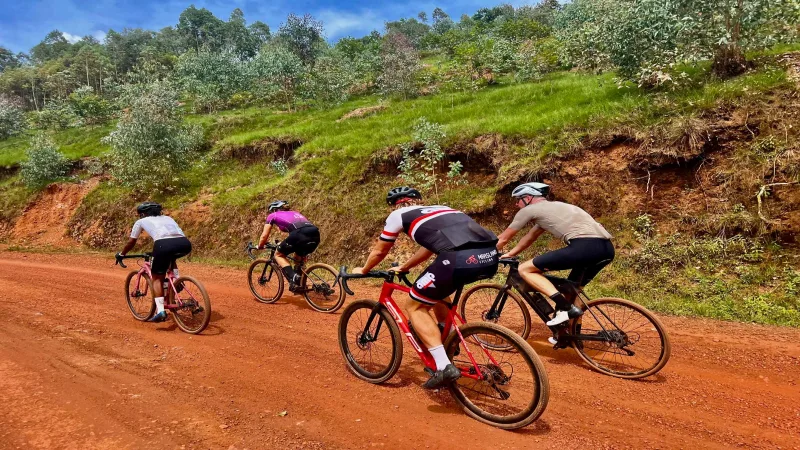
It's hardly surprising, then, that this tiny Central African country caught the eye of cycling's ruling elite, the UCI. Thanks to the immaculate lattice of tarmac roads that trace its quilted contours, the international governing body of racing cycling chose Rwanda to host the 2025 Road World Championships, a continental debut. Among those who appreciate such things, Rwanda has since secured bucket-list status, with riders flocking from far and wide to sample its delights.
A Way of Life
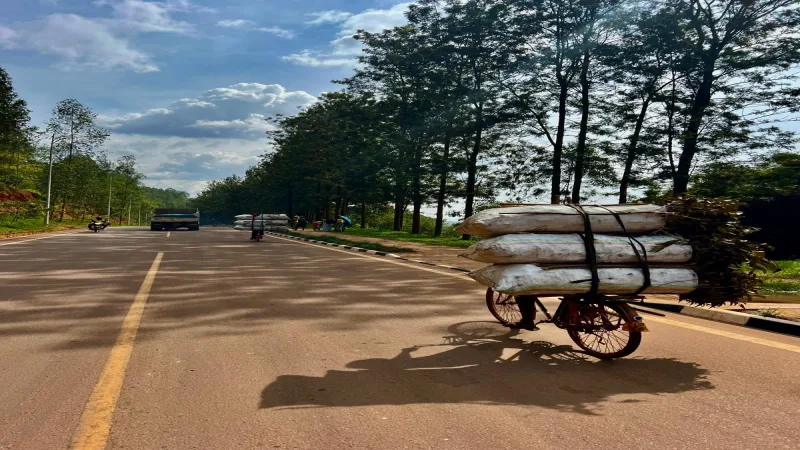
But cycling in Rwanda is not merely a pastime of imported popularity. In fact, the economic engine of the country has no engine at all, the wheels of progress are spoked. Almost everything in Rwanda is transported by bicycle, whether livestock, furniture, or people. The bikes themselves are modest contraptions: a simple steel frame, a wrought iron rack, and a single freewheel gear. The riders, on the other hand, are nothing short of Herculean. Unaided by the trappings of modern technology, ergonomics, aerodynamics and, crucially, gears, these porteurs ferry cargo of a hundred kilos or more along the scenic byways that unite the largely rural population. Sharing the road with them is spectacularly humbling.
Self-supported? I Think Not
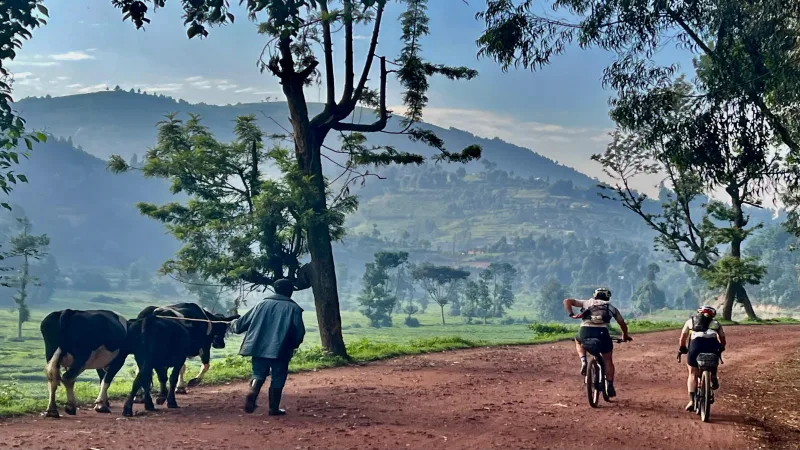
Like much of the African continent, sharing is woven into the fabric of the country. For an agricultural economy, Rwanda supports a surprisingly dense population. And while in other countries, where crowds of friendly faces only materialise when stationary, in Rwanda, you're often lucky enough to have new friends move with you. Brigades of bright-eyed children, ecstatic at the arrival of a two-wheeled tourist, will sprint along the road, spouting learned English phrases with evident glee. Whenever the road inclines, as it invariably does, pint-sized pre-schoolers and their half-pint siblings leap into action, keeping pace with you as you climb.
"Goode-morning!" they shout, rubber sandals squeaking rhythmically on the blacktop.
"Good morning!" you reply.
"How-ar-yoo!" they shout.
"I'm fine, thank you, how are you?" you reply.
"Yime-fine!" they shout, before adding, with inextinguishable enthusiasm, another effervescent, "Goode-morning!"
And so the cycle repeats. This dialogical dance offers sublime distraction from the effort of the climb and, by the time you've spun a dozen or so laps, you'll have settled into a comfortable cadence; so much so that when a pip suddenly squeaks, "Goode-Aftanoone!" you'll be hard pressed not to fall off your bike.
Ride Rwanda for yourself
Rwanda, The Thousand Hills is an 11-day self-guided bikepacking trip through the country's best gravel and tarmac. Happy to answer any questions, just reach out.
Gold Standard Dirt
Yet whenever the mood for some solitude takes hold, Rwanda once again obliges. Where the country's tarmac is a stadium, bustling, high energy, performative, its gravel is hallowed turf. As you penetrate the depths of the countryside, you enter a place of unparalleled beauty. Exquisitely ordered agriculture reveals the ingenuity of generations of growers. Terraces carved into the hillsides make the most of the ground's unforgiving slopes, granting the landscape a unique, pop-up quality, as if the product of intricate origami rather than of hard labour with a shovel. It is, in short, perfect bikepacking country.
Paddy fields line the wide valleys, Rwanda's only flat ground, benefitting from the natural irrigation of the seasonal floods. The tracks hug the hills' contours, occasionally dipping down to cross the valley floor on raised roads, before winding back up to skirt the next of the country's thousand. This is where Rwanda stands apart. On those paths less travelled, the brick-red dirt demands exploration.
Here, villages dot the hillsides, each furnished with pallet shacks selling ice-cold Fanta in glass bottles, and mandazi, boules of sweet bread with a crisp crust and warm, pillowy centres. These communities appear like a mirage, satisfying the cravings that arise during solitary stretches in the saddle. A phrase or two of Kinyarwanda, Mwaramutse, Amakuru, will never fail to delight, and your wave of farewell will be returned by a hundred hands. Hospitality, affability and human decency are international languages, ones in which Rwandans are fluent.
A Tale of Two Countries
Uniquely, in contrast to the clamorous urban tapestry found across much of the continent, cosmopolitan Rwanda charms no less than its rural counterparts. Kigali is a slick city, equipped with all the trappings of a well-managed metropolis; traffic flows in assigned lanes, green spaces and public parks blend seamlessly with the built environment, and bins line the pavements, the presence of pavements alone places it in a position of relative privilege compared to the urban centres of many of its neighbours. It feels calm, communal, yet convenient.
And the urban, of course, offers certain pleasures the rural cannot. Coffee, for instance, is ever-present: unlike many of the world's other top producers, where exports cull domestic consumption, Rwanda serves bean-to-cup coffee with abandon. Innovative art, food, and music; strong environmental initiatives; and moves towards gender equality and social mobility, all testify to a country brimming with ambition.
And yet no discussion of Rwanda is complete without mention of the events that shaped the country's enigmatic progress, the dark strokes that have textured this beguiling land. Learning about the genocide provides both context and contrast, adding depth to the history of a nation divided and reunited. It provides crucial perspective for a visitor, revealing the resilience of Rwanda and its people. The riding, of course, is unforgettable, but the Land of a Thousand Hills has so much more to offer.
In essence, the intimacy of two-wheeled travel transforms a journey through the country into a meditation on connection and division, brutality and humanity, and the dynamic nature of a place and its people.
About the author
Jake Thorpe is an adventurer, writer and secondary school maths teacher based in London. He has toured in 30 countries across Europe and Africa, including a 20,000 km solo ride from London to Cape Town.
Chat with Kees on WhatsApp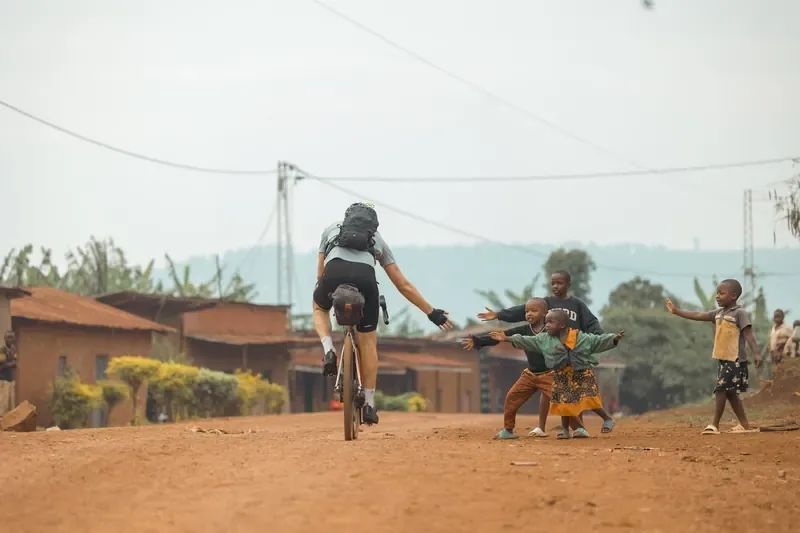
from €2,195
Red gravel, tea country and the Congo Nile Trail. The people are even more beautiful.
Find out moreRead next
Bikepacking the Cairngorms: Four Days from Aviemore to Pitlochry
Four days of bikepacking in the Cairngorms, Scotland: 299 km of forest gravel, old military roads, a night in a bothy and Balmoral. Our test ride, day by day.
10 min read Yannick
Gravel Cycling in Rwanda: A First-Timer's Diary
Pascalle had never ridden eight days in a row. Her diary of cycling Rwanda with our guided gravel group: almost 500 km and 13,000 m of climbing.
11 min read Pascalle