Destination Guide
Bikepacking Rwanda: Routes, Seasons and What to Expect
In this story
By Yannick Ferbeek.
Update, November 2026: I wrote this before our first group trip in September 2026. That trip has now been ridden, and my story from the road follows in a new blog.
This September I get to do something I have been looking forward to for a long time. For the first time, I will experience a Legendary Rides trip from the inside, as I guide our very first group trip to Rwanda. Guiding a group is something I have done many times. Going to Rwanda is my first.
We are doing this for two reasons. Several clients told us they would love to ride Rwanda, but preferred to share the experience with others. That lines up perfectly with the passion that started this whole journey. When I began building Legendary Rides, I turned down a pretty decent career path because I wanted to build and guide outdoor group trips. I love the craft of it: reading a group, checking in on both the group and the individual, sensing which conversation needs to happen before anyone else notices, and gently stretching people's mental and physical comfort zone so their confidence grows with it.
I can hear you thinking: but you go on all these trips already, right? True, and yet the story is different for every destination. Our Rwanda trip is built on the knowledge of Kees, who has ridden the Race around Rwanda, a self-supported ultra race through the heart of the country, its nature and its people alike. It is a race in which men and women ride solo, day and night, safely and comfortably. Together with the local team and company behind the Race around Rwanda, we have built our own self-guided bikepacking trip through the land of a thousand hills. It is a way for people that aren't crazy enough to cycle an ultra but do like to keep the adventure.
For me, this September is a rare chance to feel exactly what our Rwanda bikepacking trip is like from the inside, and to see where we can learn and improve. Riding alongside the group, I get to look at what we are building with fresh, almost outsider eyes.
Where do you actually ride in Rwanda?
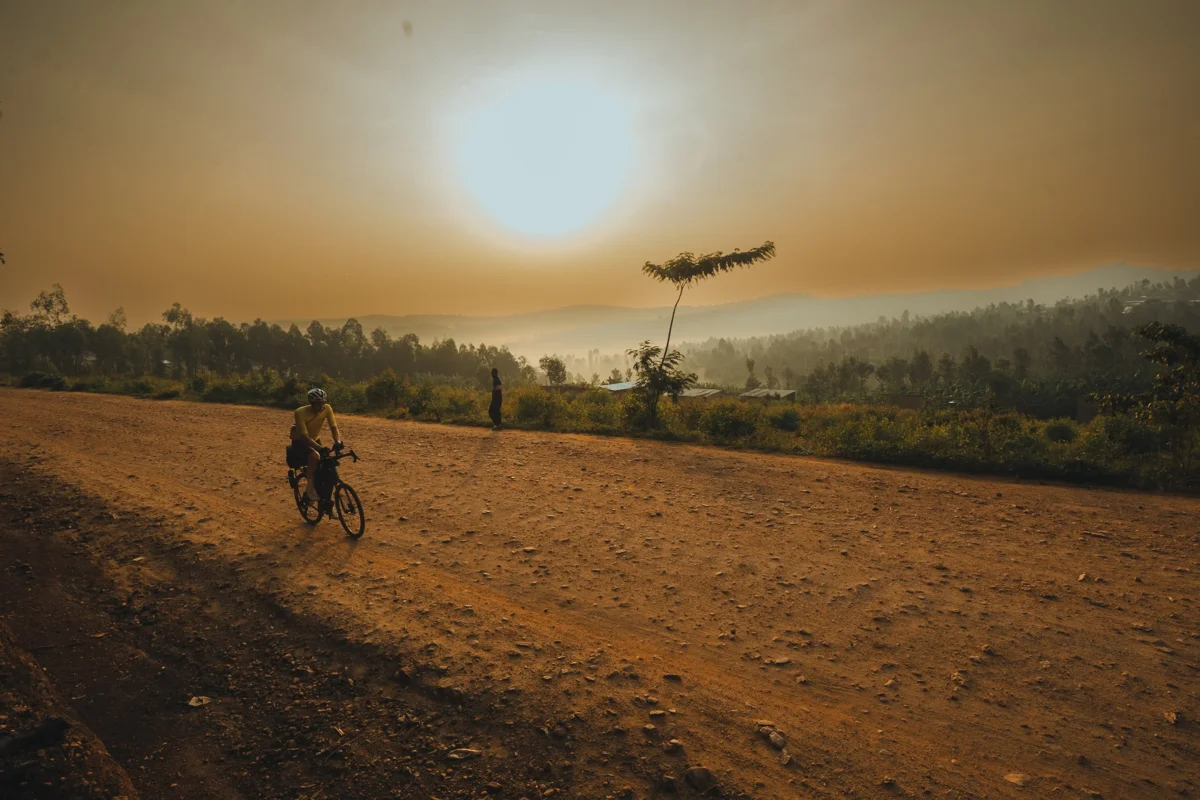
Our route runs through diverse landscapes across the country, eight riding days from Kigali in the central east to the Nyungwe rainforest in the southwest. It starts with a climb to Bumbogo for a look back over the capital, then drops into the countryside and crosses Lake Muhazi by small boat. From Rukomo, Rwanda's BBQ capital, you head into the tea country of Byumba and Sorwathe, some of the greenest riding of the whole trip. You loop around Mount Kabuye, the highest free-standing peak, to the twin lakes at Ruhondo, then ride the line of mighty volcanoes in a country where gorillas live and are protected. Before you wonder: that does not mean you will meet one on the road. From there you drop to Lake Kivu and follow the Congo Nile Trail along the shore from Gisenyi to Nyamasheke, banana plants hanging over the water. The Congo Nile Trail is a classic and challenging bikepacking route in East Africa. The final day climbs straight into the Nyungwe rainforest. Between 446 and 620 km in total, and every day has a long option and a shorter one. We added rest days, so the whole group can breathe.
How hard is bikepacking in Rwanda?
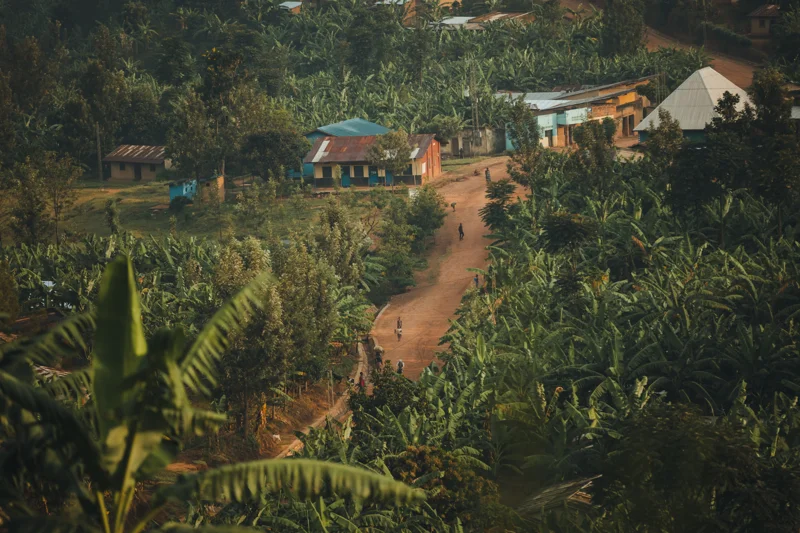
Truth be told: it is a proper challenge. They do not call it the land of a thousand hills for marketing. You are almost never flat. A day is either up or down, most of it on gravel and red dirt, sometimes on tarmac. Where we could, we designed it so the uphill battles are offroad and the descents come on tarmac or smooth gravel. Over the eight riding days you climb between 11,000 and 16,000 meters, close to twice the height of Everest. Understand that you will be riding up to around 2,800 metres of altitude, giving both protection to the African heat, as allowing for a challenge. Kees swears it is doable as long as you take the shorter option when your legs ask for it, and I am choosing to believe him.
The biggest lesson I have learned so far is this: if you take it slow, keep feeding your body with food and fuel, and dare to take your time and enjoy it, you are usually capable of far more than you think. Yes, the climbs are spicy. But from everything I have seen, the views buy them back every single time. Consider this an investment to an adventure of a lifetime, one to share with your partner or friends, and the kind of experience that leaves you with lasting memories and a story worth telling.
When is the best time to ride Rwanda?
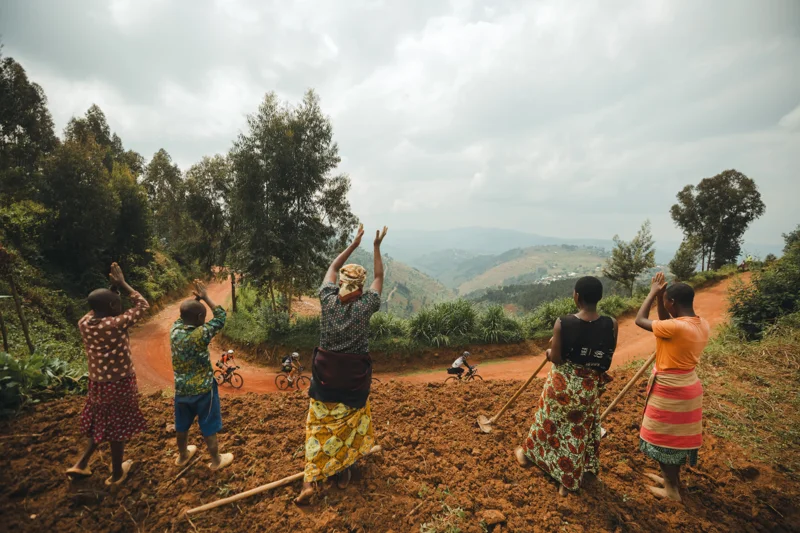
The two months to avoid are April and May, the main rain season. Beyond that, Rwanda barely has a bad month. The dry seasons, June to September and December to February, are the sweet spots for gravel. The red roads are firm, the long climbs stay rideable, and the light is good from morning to evening. Shoulder months like October and November can be wetter, though still warm since it is tropical, and they reward you with an even greener, quieter country. The rain mainly falls the end of the day. Our guided group trips run in February and September, both right inside a dry window.
Ride Rwanda with us
Self-guided or with a guide, from Kigali to the Nyungwe rainforest. Happy to answer any questions, just reach out.
What to expect on the road
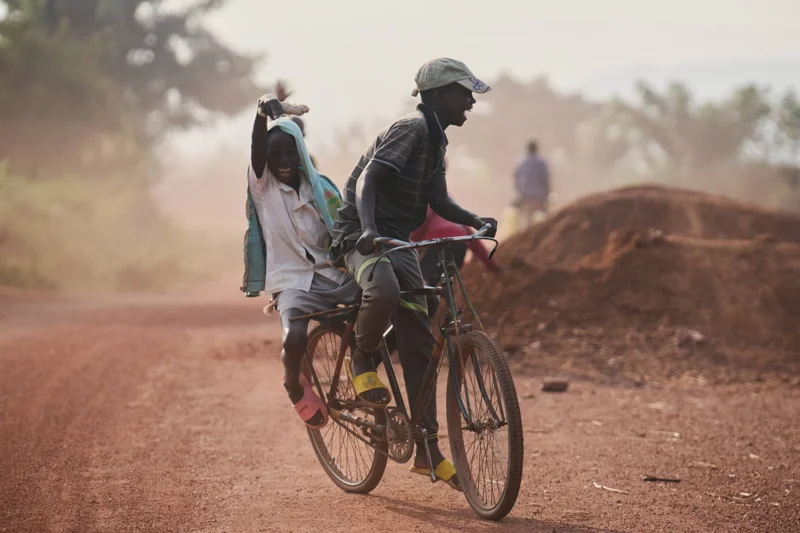
The riding is only half of it. The stories that stay with you are about the people. Riders who pull alongside for a while and give their all to a friendly, curious conversation. The stops where you wait for food, and the small lessons that come with them. Kees learned one the hard way: if you order by holding up fingers for the number of dishes you want, remember that a thumb held out next to your fingers does not get counted, so you can end up one meal short. It took him four riding days to crack the code. Take it to your advantage and make sure you get all the food you need out there.
Then there are the schoolyards full of kids who cheer as you ride past. All you have to do is clip in and pop a little jump with the bike, and you have made their day and your own.
And then there is the story of Laurens ten Dam, who rode the Race around Rwanda for their podcast Live Slow Ride Fast the same year Kees took part. Riding into the night, he unfortunately crashed, as he got up, a Rwandan guy found him and gave him food and a place to sleep, and then insisted Laurens take the main bed of the house. We are not asking you to test that hospitality, which is exactly why your accommodations are already sorted. But gestures like that say everything about the people you will meet.
That is the Rwanda Kees describes to me, a warmth you never have to go looking for because it finds you first. Expect people waving from doorways, and brochettes at a roadside grill in Rukomo that riders rank among the best food of the whole trip. And yes, expect hard moments too: the climb that will not end, the heat, the dust in your teeth. That is bikepacking. You solve it, you laugh about it that night, and it becomes the story you tell for years.
What do you need to bring?
Whether you ride with us in a group or self-guided, the essentials are the same: layers for a morning that starts at 2,600 metres, that goes into a hot valley, sun protection for the exposed climbs, a comfortable set of riding clothes or two, and the patience the hills will ask of you. If you bring your own bike, pack specific spare parts too, because you are riding on a continent where not everything is available. Pack light, respect the climbing, and build in a rest day by the lakes. On a Legendary Rides trip the rest is handled for you. You ride a gravel or mountain bike fitted with bikepacking bags, your own or one rented from our partner on the ground, the GPX routes are designed and tested locally, and there is an emergency car and a medical helicopter on standby. So all you really carry is your legs, your curiosity and a healthy amount of self-reliance.
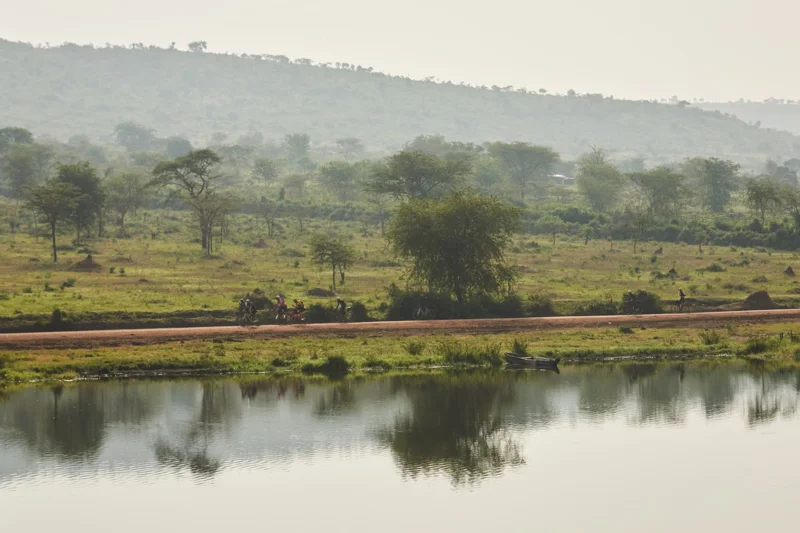
Ride it with us
In September 2026 I led that first group across the whole route, Kigali to Nyungwe: twelve days, eight of them on the bike and a rest day halfway, overlooking the lakes. Everything on the ground is taken care of, from the bike to the beds to the backup when it is needed. In 2027 we ride it again with a small group, from 15 to 26 February and from 19 to 30 September, with Kees or me as your guide. Rather ride at your own pace? The self-guided route runs from June to March. If Rwanda has been sitting on your bucket list, come and ride the thousand hills with us.
Wish you nice riding, and I hope you enjoyed the read.
Yannick
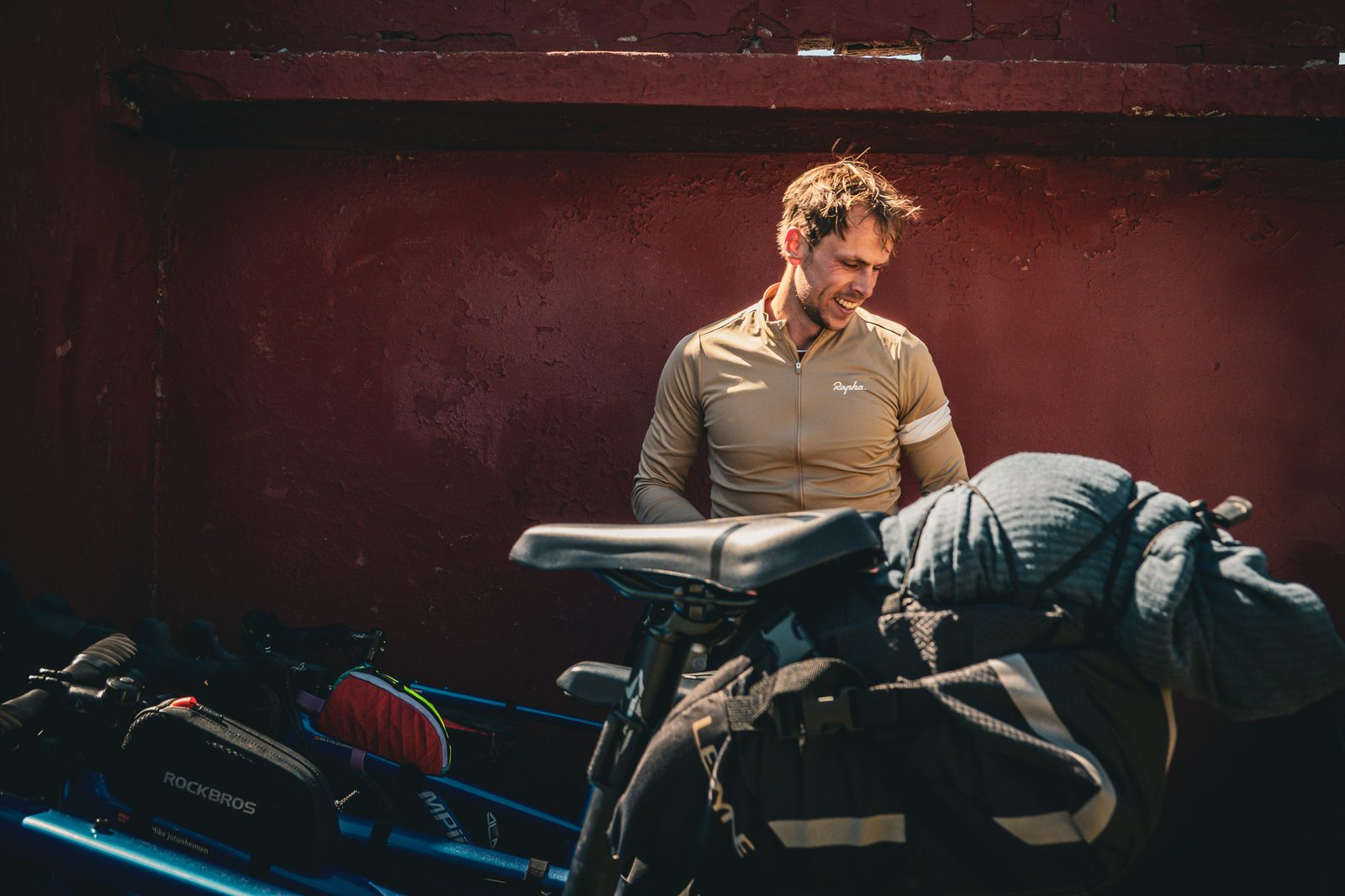
About the author
Yannick is co-founder of Legendary Rides. He rides, tests and writes the routes you'll find on these trips. From the Big Five in the Netherlands to his first gravel trip in Andalusia, testing Slovenia, guiding a group in Rwanda and, together with Kees and Markus, a press trip through Scotland. He keeps building destinations that are finger-licking good.
Chat with Yannick on WhatsApp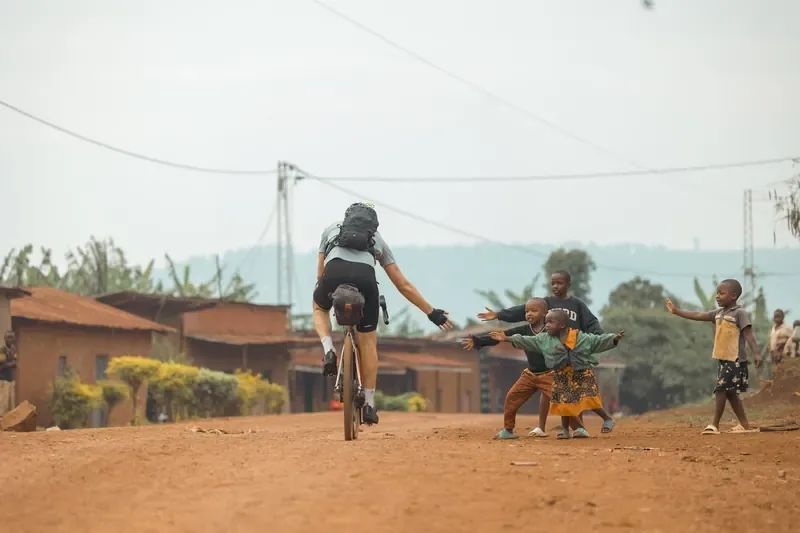
from €2,195
Red gravel, tea country and the Congo Nile Trail. The people are even more beautiful.
Find out moreRead next
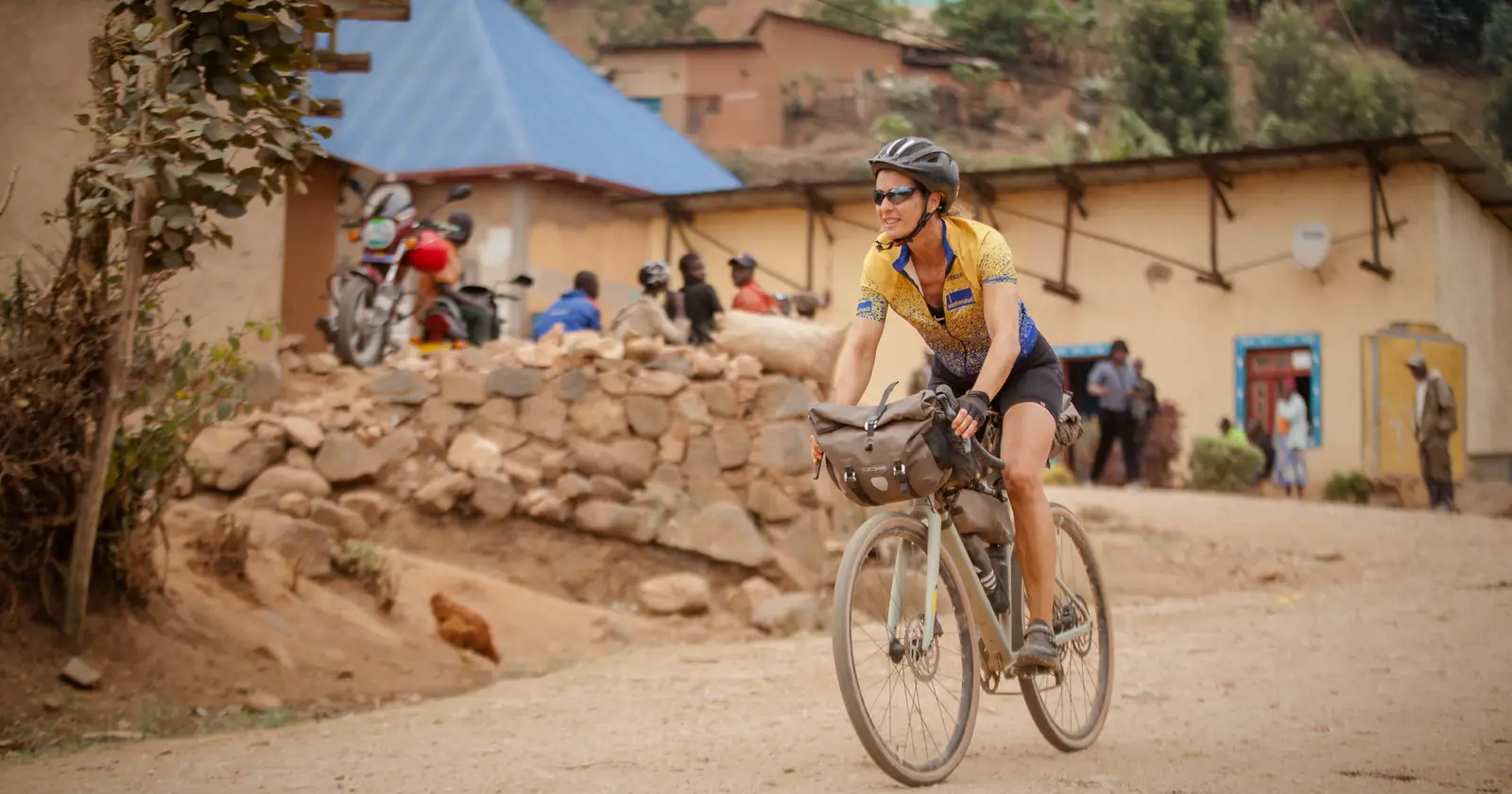
Gravel Cycling in Rwanda: Pascalle's Group Trip Diary
Pascalle had never ridden eight days in a row. In September 2026 she joined our guided gravel trip in Rwanda: 500 km and nearly 13,000 m of climbing.
11 min read Pascalle
Bikepacking in Andalusia: The Badlands Loop from Granada
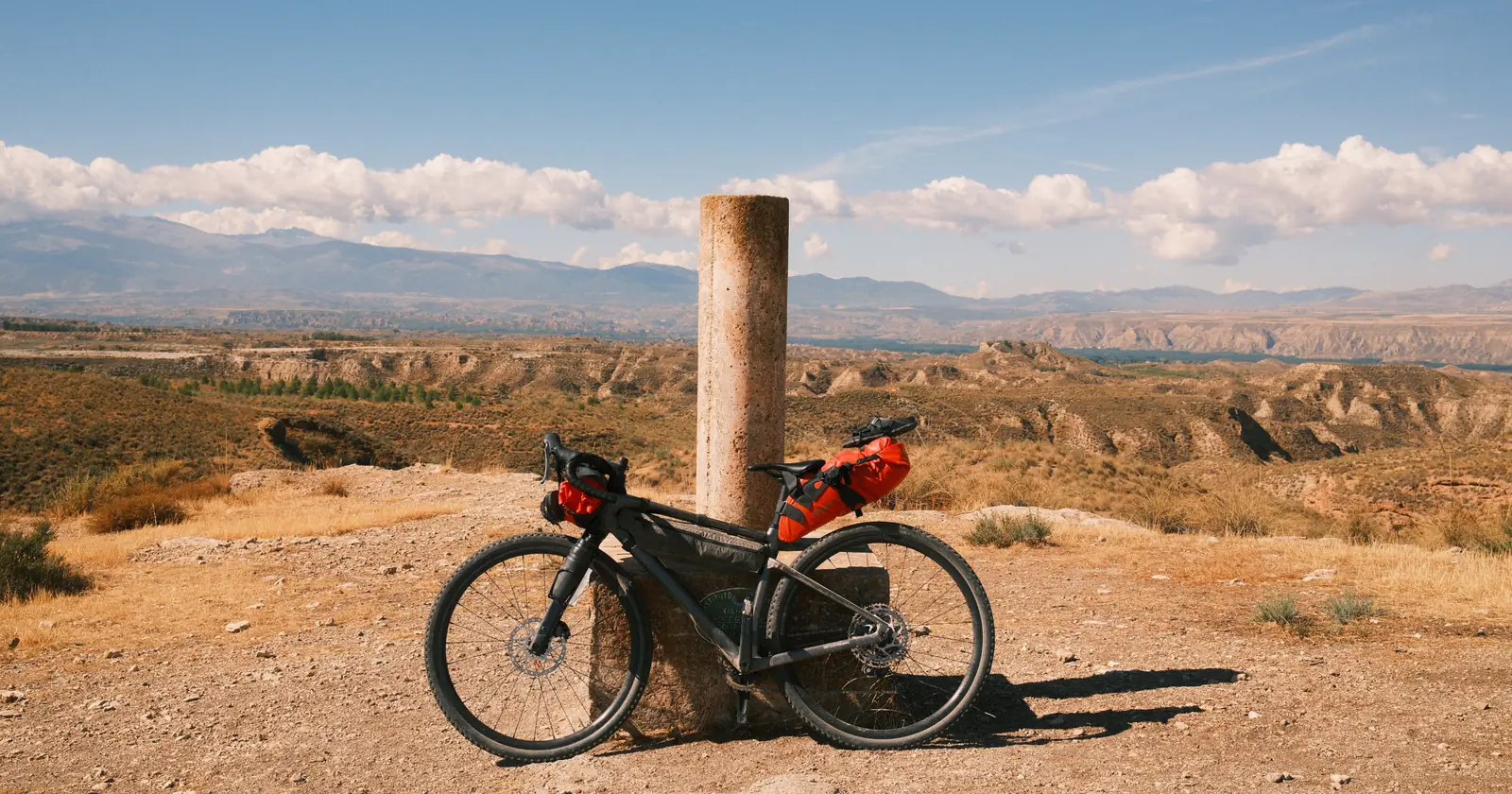
Bikepacking in Andalusia: a self-guided gravel loop from Granada through the Gorafe desert, 5 to 8 days. Shorter days, real climbing, harder options.
8 min read Yannick